Corroded interior
The trap’s working surfaces, baffles, or connection areas are deteriorated, while the surrounding installation may still support a retrofit approach.
Custom retrofit solutions
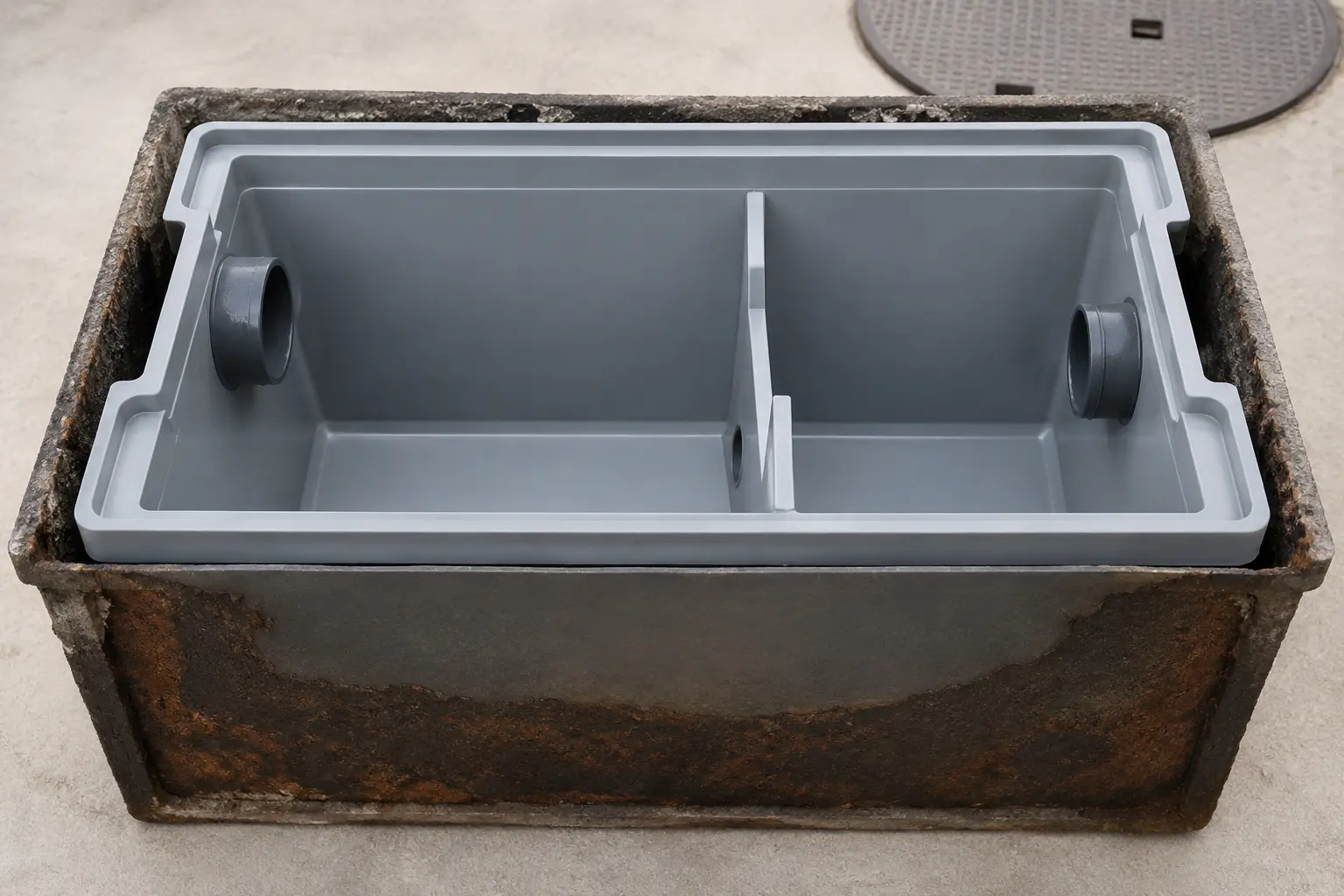
A custom drop-in liner may offer a less disruptive alternative to complete removal when an existing interceptor is corroded, embedded, or difficult to access.
Why consider a liner?
Removing an old interceptor can mean demolition, excavation, plumbing changes, floor repair, and business disruption.
Where the existing installation and approving authority allow it, a purpose-built insert can create a new containment surface inside the original footprint. Pipe penetrations, baffles, and edge details can be incorporated around the project’s measured conditions.

Concept illustration. Each liner is reviewed and built for the actual field conditions.
Good starting candidates
These conditions do not guarantee that a liner is appropriate, but they are common reasons to request an evaluation.
The trap’s working surfaces, baffles, or connection areas are deteriorated, while the surrounding installation may still support a retrofit approach.
The unit is recessed into a finished floor, built around equipment, or located where excavation and replacement would significantly interrupt operations.
The existing opening, pipe locations, or dimensions do not match a readily available replacement unit.
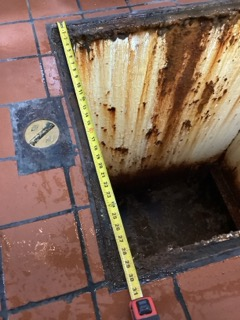
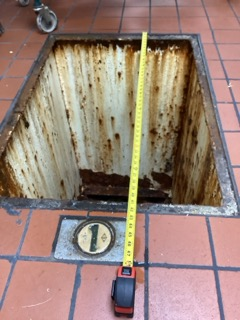
Help us evaluate it
Start by documenting the trap after it has been safely emptied and cleaned by qualified personnel. Do not enter a confined space or handle hazardous waste to obtain measurements.
Liner project flow
Accurate information at the beginning helps prevent assumptions and identifies whether a liner should move forward.
Send dimensions, pipe information, photographs, access details, and the trap’s known condition.
We review the geometry, connections, material needs, and project constraints.
Open questions, final measurements, responsibilities, and approval needs are resolved before fabrication.
The liner is built to the confirmed specifications and prepared for the project’s installation plan.
Have a corroded trap?